Table of contents
Scrolling through beauty content is easy, but feeling better at the end of a routine is rarer, and that gap is now drawing serious attention from wellness researchers and clinicians. Mindfulness-based approaches have moved from niche meditation rooms to mainstream healthcare, and the evidence base keeps growing, with meta-analyses linking these practices to reduced stress, anxiety, and depressive symptoms, and to better quality of life. The question many readers are asking is practical, not philosophical: can everyday beauty rituals, done with intention, deliver some of those same benefits?
Beauty routines: autopilot, or attention training?
What if the mirror became a checkpoint? In the clinical literature, mindfulness is typically defined as paying attention to the present moment, on purpose, and without judgment, a deceptively simple skill that can be cultivated through formal meditation, but also through “informal practice” embedded in daily life. That second route matters, because adherence is the Achilles’ heel of many wellness habits, and short, repeated moments of attention may be easier to sustain than a 30-minute sit. Research summarized in large reviews suggests mindfulness-based interventions can reduce perceived stress and improve mood, and while most studies focus on structured programs, the mechanism, sustained attention plus a different relationship to sensations and thoughts, can be rehearsed in smaller doses.
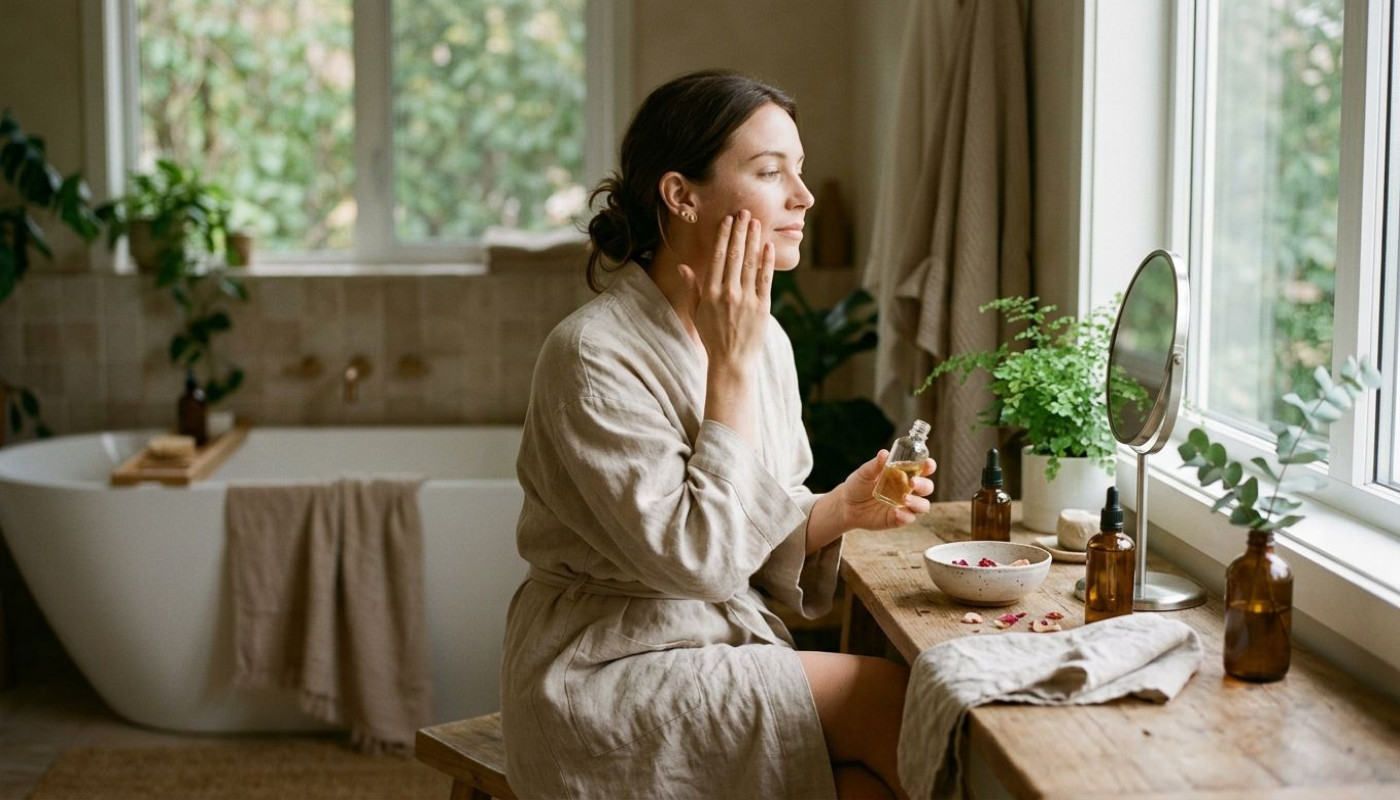
Beauty rituals, at their best, are already built around sensory anchors: warmth of water, texture of cleanser, scent of a balm, pressure of fingertips, and the visual feedback of skin changing over time. Those anchors look a lot like the “objects of attention” used in mindfulness training. The difference is how they are approached. On autopilot, a routine becomes a checklist performed while the mind runs ahead, replaying messages, rehearsing meetings, and scanning for problems. Done intentionally, the same steps can become a short practice in noticing, especially if you slow down enough to track sensations, label distractions, and return to the present, which is the basic loop taught in mindfulness courses.
There is also a physiological reason the beauty-and-mindfulness overlap feels plausible. Stress is not just an emotion; it is a cascade that can influence sleep, inflammation, and behaviors that affect skin, including picking and disrupted routines. Studies on stress and skin conditions have long noted links between psychological strain and flares in issues like acne and eczema, and while no cream can “solve” chronic stress, a ritual that reliably downshifts arousal may indirectly support skin health by improving consistency, sleep hygiene, and self-care decisions. The key is not magical thinking, it is the compounding effect of small, repeatable regulation moments.
Touch, breathing, and the nervous system
Touch changes the story fast. In the body of research on massage, randomized trials and meta-analyses have reported reductions in anxiety and depressive symptoms, and decreases in stress markers in certain contexts, though effects vary by population and study design. The most consistent takeaway is not that massage is a cure, but that tactile stimulation, when it feels safe and predictable, can nudge the nervous system toward parasympathetic activity, the “rest and digest” mode many people struggle to access during high-pressure weeks. That is one reason slow facial massage, scalp work, or body moisturising can feel mentally quieter than purely visual routines.
Breathing is the other bridge. Mindfulness programs often emphasize an anchor such as the breath because it is always available, and because shifting breathing patterns can change arousal quickly. Even a brief routine can borrow that logic: inhale during application, exhale during gentle pressure, pause to notice the temperature of hands on the face. The point is not to turn skincare into a performance, but to create a predictable sequence that trains interoception, the ability to sense internal states, which is increasingly discussed in neuroscience and mental health as a contributor to emotional regulation.
Some beauty practices go further by incorporating structured, rhythmic touch, for example gua sha, gentle drainage-style movements, or slow neck and jaw release. While online claims often sprint ahead of evidence, the mindful angle does not require dramatic promises. If the practice encourages slower tempo, reduced multitasking, and consistent attention to sensation, it aligns with the behavioural ingredients associated with mindfulness benefits. For readers interested in more structured bodywork, resources describing lymphatic-oriented massage approaches, such as maison-ysae.com, can also help clarify what a session involves, how it is typically performed, and what realistic goals look like.
Why it works for some, not all
Here is the uncomfortable question: are you actually present? Mindfulness is not the same as “me time,” and a beauty ritual can just as easily become another arena for self-criticism, comparison, and perfectionism. If the inner soundtrack is harsh, the routine may amplify anxiety instead of easing it. Psychologists have long described how appearance-focused behaviours can become compulsive in vulnerable people, and while most skincare habits are harmless, the mindful version requires a deliberate shift from evaluation to observation. That means noticing thoughts like “my skin looks terrible” as thoughts, not as verdicts, and returning to sensation and breath.
Time pressure matters, too. A rushed routine performed between late-night emails may not deliver much regulation, because the nervous system stays in task mode. This is where design beats motivation. If the goal is mindfulness, choose one step to slow down rather than adding steps, for example turning cleansing into a 60-second practice, or applying moisturiser with attention to temperature and pressure. Research on habit formation repeatedly shows that consistency and simplicity tend to win over complexity, and small rituals that fit real life are more likely to stick through stressful periods.
There is also the question of skin sensitivity and sensory preferences. For some people, strong fragrance, heavy textures, or aggressive tools are overstimulating, not calming. Mindful beauty does not mean more sensation; it means appropriate sensation. If a product stings, if pressure triggers headaches, or if certain movements worsen jaw tension, the practice becomes a stressor. In those cases, the mindful move is to simplify, consult a dermatologist when symptoms persist, and treat the ritual as a supportive container, not a test of endurance. The most sustainable routines are often the gentlest ones.
A practical way to build a mindful ritual
Start with one minute, not a manifesto. A workable blueprint is to pick a single daily step, cleansing at night is a common candidate, and turn it into a micro-practice with clear cues. Begin by putting the phone out of reach, because divided attention is the enemy of mindfulness, then take one slow breath before touching the face. As you apply the product, track three concrete sensations, for example warmth, slipperiness, and pressure, and when the mind wanders, name it briefly, “planning,” “worrying,” “judging,” and return to the sensations. This mirrors the structure used in mindfulness training, but without the need for special equipment.
Then, build a second layer: intention and closure. Intention is not a wish list; it is a single sentence that defines the tone, such as “I’m doing this to unwind,” or “I’m caring for my skin with patience.” Closure is a deliberate end point, such as rinsing slowly, drying with two hands, and taking one exhale before leaving the bathroom. This matters because the brain responds to boundaries; without a closing signal, routines bleed back into mental noise. Over time, that closing breath can become a conditioned cue for downshifting, similar to how bedtime rituals train the body for sleep.
Finally, keep expectations realistic and measurable. Mindfulness benefits in clinical research typically accumulate over weeks, not days, and they are often reported as shifts in stress reactivity, rumination, and emotional balance, not constant calm. A useful metric is not “did I feel blissful,” but “did I notice my mind wandering and come back,” or “did I complete the routine without multitasking.” If you want to deepen the practice, extend the slow phase to facial massage, add a few neck stretches, or schedule occasional professional bodywork within budget, but treat these as supports, not requirements. The most powerful part is repetition with attention.
A calmer routine, without overselling it
Mindful beauty is less about products and more about presence, and that is why it can be surprisingly effective for stress-prone routines. If you want to try it, start with a one-minute nightly practice, keep purchases minimal, and consider occasional sessions only if they fit your budget. Some workplaces and insurers support wellbeing initiatives; check whether you have access to stress-management or preventive-care benefits before booking.
On the same subject

The UK to double test new arrivals during the quarantine

France Mila case: Four individuals arrested over death threats to a French kid
